Have you ever found yourself talking high-pitched gibberish to a dog? In one way or another, humans are physiologically drawn to dogs. Apparently, the baby-schematic features of a dog (round face, large eyes) trigger “caregiver” instincts in humans, releasing dopamine and oxytocin. This is fascinating because there are 339 dog breeds in the world, and every single one was bred to be a compassionate companion to humankind, yet they all have distinct facial features! However, dogs weren’t just bred to be cute. Breed-specific facial features have emerged and evolved over thousands of years to serve practical functions that meet human needs.
Dolichocephalic Dogs
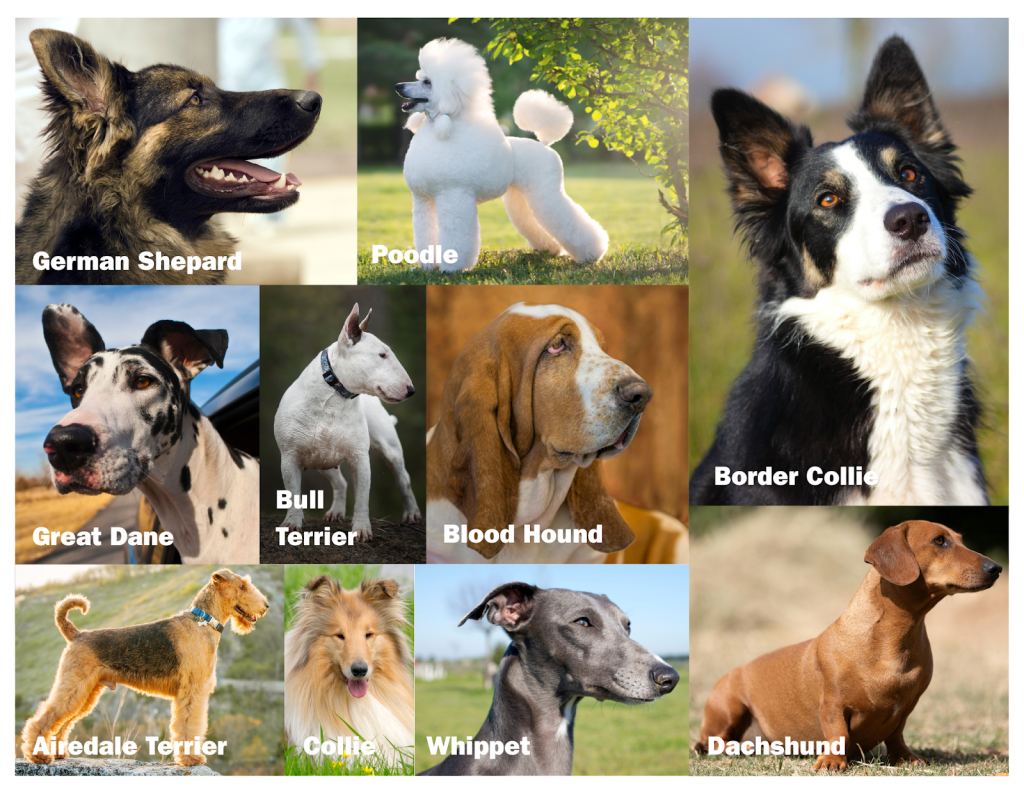
Elongated snouts and faces are a result of selective breeding. Dolichocephalic (doll-ih-koh-suh-FAL-ik) means “long-headed,” derived from the Latin word dolichocephalus, meaning “long-headed,” and the Greek words dolichos, meaning “long,” and kephalē, meaning “head.” Some well-known dolichocephalic examples include Greyhounds, Border Collies, Poodles, Bull Terriers, Bloodhounds, German Shepherds, and Dachshunds.
Dolichocephalic dogs were bred to have excellent sight for hunting. Their long snout provides a wider range of vision in addition to their horizontal line of vision, allowing them to see up to 270 degrees (while a human can see about 180 degrees). Their thin head is designed for reduced air resistance and better running (Greyhounds can reach speeds up to 45 mph), and when such a dog turns at high speeds, its profile acts as a balancing aid. As a bonus, their long nasal passages and large mouth gape provide a healthier respiratory profile. Dolichocephalic dogs were bred to be athletes.
Brachycephalic Dogs
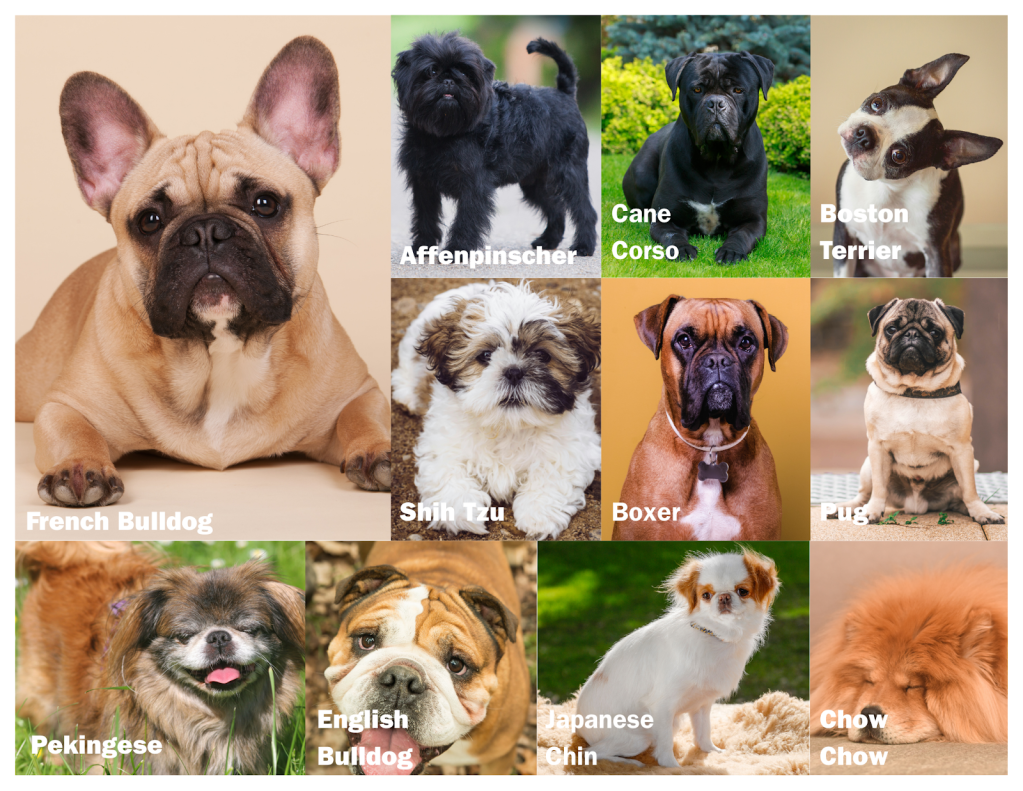
Compressed snouts, faces, and “miniature” features are a result of selective breeding. Brachycephalic (brak-ee-suh-fal-ik) is derived from two Greek roots: brachy-, meaning short, and cephalic, meaning head. Some brachycephalic breeds include, but are not limited to, the French Bulldog, Cane Corso, Boxer, Chow Chow, and Affenpinscher.
It should also be stressed that most brachycephalic dogs suffer major health issues because they are the consequence of repeatedly breeding for similar facial features. So why are they bred? It’s theorized that around the 1540s, breeders were aiming for stronger facial features, especially in the jaw. These dogs would then fight bulls for public entertainment.
When bullfighting became illegal, some people found the Bulldog breed appealing and bred them to increase their wrinkles. In imperial China, breeds like the Pekingese were bred to be “toy-like” so they could fit inside kimonos. Similarly, in Europe these dogs were appealing and became the “toys” of the household.
Brachycephalic dogs continue to dominate in popularity around the world. They no longer have a labor-intensive purpose, but are instead kept as cuddly, “infant-like” companions.
Mesocephalic Dogs
 Ram Page: Bristol Central High School's Student-Run Newspaper